Thank you! Your submission has been received!
Oops! Something went wrong while submitting the form.
New: 2026 edition with chapters on validation and AI
Learn how pharma companies are building modular SCEs that support validated submissions and AI workloads on the same architecture.
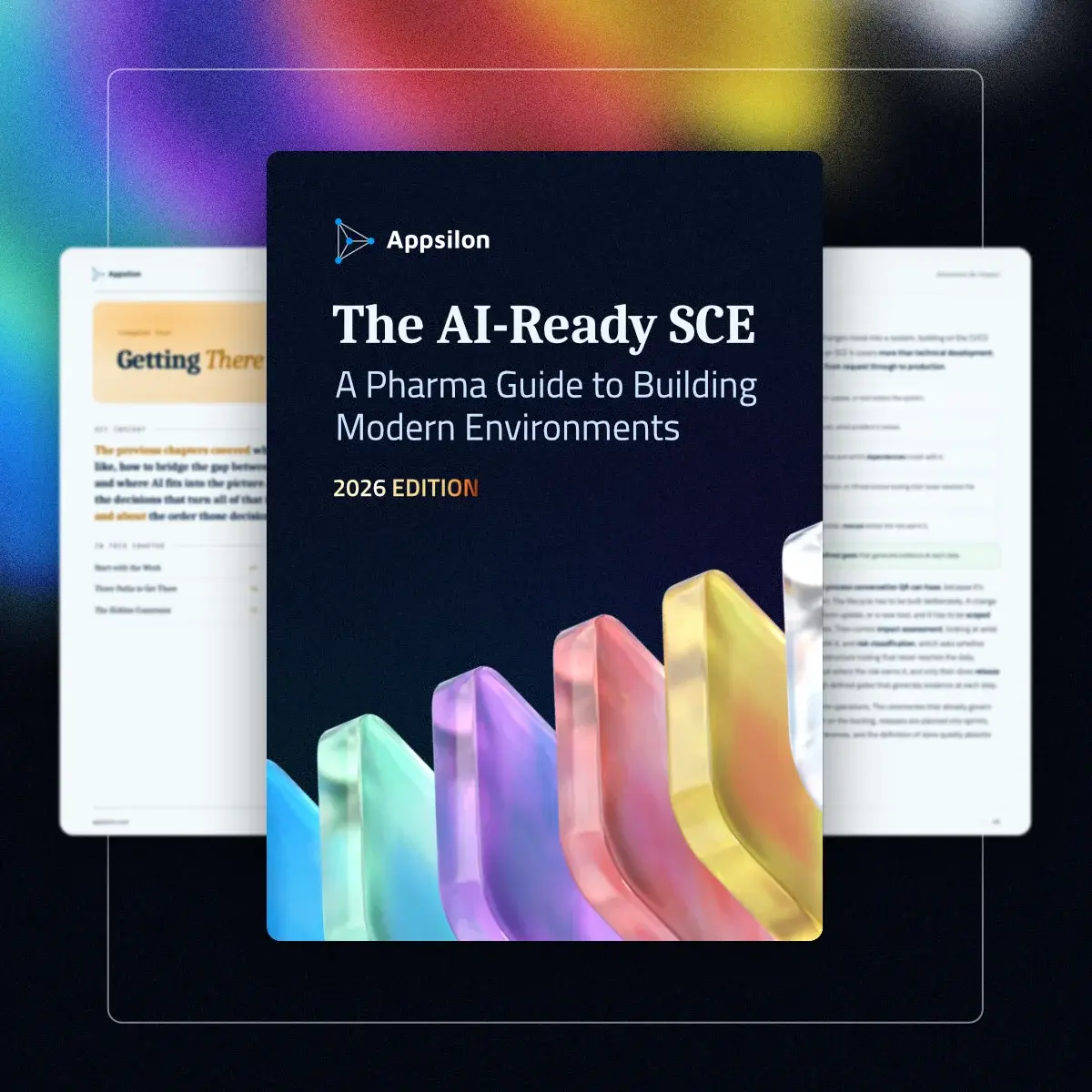


Learn how to modernize your SCE to handle validated submissions and AI workloads and discover what's working at leading pharma companies.
The five layers of a modern SCE: infrastructure, data, platform, process, compliance; and why a system that supports submissions on Monday and exploratory ML on Tuesday is now a competitive baseline, not a stretch goal.
Why validation is a system property, not a periodic event. A practical framework for validating R and Python packages, container images, and platform changes continuously, so a CRAN release becomes a routine operation, not a quarterly project.
The three categories of AI workload in pharma today: GenAI assistants, validated ML pipelines, and AI agents in regulated processes combined with the engineering foundation that determines whether you can deploy them cheaply or not at all.
Build vs. buy vs. partner — what actually works at different organization sizes. Plus real examples: Novo Nordisk's open-source migration, a top 50 pharma saving $930K annually, and a clinical-stage biotech going from zero to operational regulated work in six months.


Explore how open-source technology – particularly R and Shiny is transforming clinical trials and the broader pharmaceutical industry.